
Where Artificial Green Walls Work Best in QLD Homes
, by Patrick Page , 6 min reading time
, by Patrick Page , 6 min reading time
They are chosen for many reasons including consistency of appearance, suitability for shaded areas, and ease of installation. When placed thoughtfully, they can help define spaces, soften hard surfaces, and add visual interest to areas that might otherwise feel plain or underused.
I'll break down where I believe green walls works best and list some things to think about before installation.
Backyards are one of the most common places where artificial green walls are used, particularly in suburban Australian homes where outdoor entertaining is a priority. An artificial green wall can work well along a fence line, especially where the fence is visually dominant or lacks appeal. Colorbond fencing, rendered block walls, and older timber fences often benefit from the texture and depth that greenery provides. A green wall can help soften these surfaces and create a more relaxed atmosphere without changing the structure itself.
They are also useful in areas where natural plants struggle to thrive. Narrow side yards, heavily shaded corners, or spaces affected by reflected heat can be difficult to landscape with living plants. Artificial green walls offer a consistent look in these conditions and remove the uncertainty around plant survival. When planning a backyard installation, it is worth considering how the wall will be viewed. A green wall behind an outdoor dining table or along a pool boundary tends to work best when it forms a clear backdrop rather than wrapping around every surface. Leaving space around the wall can help it feel intentional rather than overwhelming.
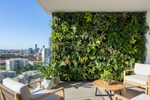
Balconies are often compact and exposed, making them a strong candidate for artificial greenery. In apartments and townhouses, balconies frequently serve multiple purposes such as entertaining, relaxing, and storage, so any design choice needs to be practical as well as visually appealing. Artificial green walls can be used to improve privacy on balconies that overlook neighbouring buildings or shared spaces. When placed along a railing or boundary wall, they help screen views while still allowing light to pass through the space. This can make a balcony feel more enclosed and comfortable without blocking airflow. They are also useful for adding greenery where weight limits or access restrictions make traditional planters impractical. Many balconies do not receive consistent sunlight, which can limit plant options. Artificial green walls provide a way to introduce greenery regardless of orientation. Scale is important in balcony spaces. A partial wall or vertical panel often works better than full coverage. Pairing greenery with neutral furniture and simple finishes helps avoid visual clutter and keeps the space feeling open.
Bathrooms are an unexpected but increasingly popular location for artificial green walls. In many QLD homes, bathrooms are designed with minimal decoration and hard surfaces, which can make them feel cold or clinical. Artificial greenery adds softness and contrast, particularly in bathrooms with neutral tiles, concrete finishes, or matte black fixtures. It works especially well as a feature behind a freestanding bath, above a vanity, or on a wall that is not directly exposed to constant water. Unlike living plants, artificial green walls are not affected by humidity or lack of natural light. This makes them suitable for internal bathrooms or spaces with limited ventilation. They can be used to create a spa like feel without introducing maintenance concerns.
When installing greenery in bathrooms, it is important to consider placement carefully. Avoid areas where water will be sprayed directly on the wall on a regular basis. Choosing a feature wall rather than full coverage helps maintain balance and keeps cleaning straightforward.
As working from home becomes more common, many Australians are investing more thought into the design of home offices. Artificial green walls can play a role in making these spaces feel more comfortable and visually engaging. A green wall positioned behind a desk or along a side wall can help break up flat surfaces and reduce the feeling of being enclosed. It can also create a visually appealing background for video calls without appearing distracting. In home offices that double as guest rooms or shared spaces, artificial greenery can help define the work zone without the need for physical dividers. This is particularly useful in smaller homes or apartments where rooms need to serve multiple functions. Keeping the design simple is key. A single panel or framed section of greenery often works better than full wall coverage. Pairing greenery with natural timber furniture or neutral wall colours helps create a calm and cohesive space.
Rental properties present unique challenges when it comes to styling and personalisation. Tenants often want to make a space feel like home while avoiding permanent changes that could affect their bond. Artificial green walls can be a practical option for renters because they can be installed in a non permanent way depending on the fixing method used. They allow tenants to add character to plain walls, balconies, or courtyards without committing to long term alterations. In rental backyards or patios, a green wall can help improve the appearance of existing fences or walls that cannot be painted or modified. On balconies, they can be used to increase privacy or soften views without structural changes. For renters, flexibility is important. Choosing smaller sections or modular panels makes it easier to remove or reposition the wall when moving out. Keeping the installation simple also reduces the risk of damage to existing surfaces.
While each room has its own requirements, there are a few general principles that apply to most artificial green wall installations. Placement matters more than coverage. A single well placed wall often has more impact than covering multiple surfaces. Greenery works best when it complements the space rather than dominates it. Lighting can significantly change how a green wall looks. Natural light enhances texture and colour, while soft artificial lighting can create depth in shaded areas. In outdoor spaces, consider how the wall will look at different times of day. Material contrast is also important. Artificial green walls tend to stand out best against neutral or textured backgrounds such as concrete, stone, or timber. Too many competing finishes can reduce their visual impact. Finally, it is worth thinking about the long term. Artificial green walls are chosen for their consistency, so selecting a style that feels timeless rather than trend driven can help ensure the space continues to feel considered over time.
Artificial green walls can work in many areas of an Australian home when they are used thoughtfully. From backyards and balconies to bathrooms and home offices, they offer a way to introduce greenery into spaces where living plants may not be practical. By focusing on placement, scale, and context, homeowners and renters alike can use artificial green walls to enhance their spaces without overcomplicating the design. Whether the goal is to soften an outdoor fence, add interest to an internal room, or create a more private balcony, greenery can play a subtle yet effective role. The key is to treat artificial green walls as part of the overall design rather than a quick fix. When integrated with intention, they can contribute to spaces that feel balanced, welcoming, and easy to live with.


We allow cookies - by clicking on accept you agree with our privacy policy.