
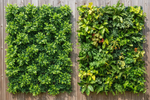
Artificial Green Walls vs Living Green Walls
, by Patrick Page , 5 min reading time
, by Patrick Page , 5 min reading time
While many people use the term green wall broadly, there are two very different types. Living green walls and artificial green walls are designed in very different ways and require very different levels of care. Understanding the difference early can help you avoid unexpected costs, maintenance issues or design limitations.
A living green wall is made up of real plants that grow vertically. These systems usually rely on a structural framework that supports soil or growing media, irrigation lines and drainage. These plants are selected based on light levels, temperature and airflow as they grow, change over time and respond to their environment. Because the plants are alive, ongoing care is required to keep the wall healthy and visually consistent in your home.
An artificial green wall is made from synthetic foliage designed to replicate the look of real plants. Panels are installed directly onto walls or frames without the need for soil, irrigation or electrical systems. Artificial green walls remain visually consistent once installed and they are designed for appearance rather than plant growth and are not affected by seasonal or environmental changes.
Maintenance is one of the clearest differences between the two options and a consistent theme with our clients. Living green walls require regular watering, monitoring and plant replacement, whilst irrigation systems need ongoing checks to prevent leaks or blockages. Plants may require pruning, fertilising or pest management (especially here in SE QLD).
Artificial green walls do not require watering, feeding or pruning and their maintenance is usually limited to occasional cleaning depending on the environment.
Living green walls rely on water and drainage to function which often means access to plumbing and sometimes pump systems is required. In indoor environments, careful water management is required to prevent moisture related damage.
Artificial green walls do not require water, electricity or drainage, which allows them to be installed in locations where infrastructure changes are not practical, including existing buildings and rental properties. This can save clients thousands of dollars over their life time as we explain a little further down.
Living plants require suitable light to survive and they must be placed where natural light is sufficient or supported with grow lighting. Without this, plant health can decline quickly.
Artificial green walls are not affected by light levels and can be installed in low light interiors, enclosed spaces or areas far from windows. This provides greater flexibility in their placement and where we can instal the panels.
Living green walls change over time as plants grow at different rates and respond to seasonal conditions. Some plants may thrive while others struggle, which can affect the overall appearance and longevity.
Artificial green walls maintain the same colour, density and shape year round due to our in-built UV protection. This consistency is often important in commercial and professional environments where clients wants panels to last for years, not just months!
This is one of our most frequenrtly asked questions, and cost differences become more noticeable when viewed over several years. Artificial green walls with an approximate starting cost of $110 per square metre have a simple cost profile. Once installed, there are no ongoing expenses related to watering, lighting or plant replacement. Over a five year period, the cost is largely the initial installation plus minimal cleaning.
Living green walls typically have a much higher upfront cost. Published Australian figures often place professionally installed living green walls between $800 and $1,500 per square metre, depending on system design and access. In addition to installation, many indoor living walls require ongoing professional maintenance and replacing.
Maintenance costs for living green walls are commonly quoted at around $25 to $30 per square metre per month for indoor systems. Over five years, this equates to approximately $1,500 to $1,800 per square metre in maintenance alone. When added to installation, the total five year cost can range from roughly $2,300 to $3,300 per square metre, excluding additional expenses such as lighting, water use or major plant replacement.
Some outdoor or simplified systems may have lower maintenance requirements, but even conservative estimates still place living green walls well above the cost of artificial systems over time.
Living green walls can be suitable in environments where ongoing horticultural care is planned and supported regularly. This includes some commercial buildings, hospitality venues or outdoor settings where natural conditions assist plant growth. In these spaces, the changing nature of live plants may be part of the appeal.
Artificial green walls are commonly used in interiors with limited light or access to water, such as offices, apartments, reception areas, retail spaces and outdoor areas that are hard to maintain. They are also well suited to rental properties or temporary installations where permanent infrastructure is not as desirable. Covered outdoor areas can also work well when exposure to weather is limited.
Both living green walls and artificial green walls can add impact to a space, but I believe they suit very different circumstances. Living green walls require higher upfront investment and ongoing maintenance to remain healthy. They look and smell great as long as they are cared for, this can also work against you if they start to die and degrade.
Artificial green walls offer a lower initial cost, predictable appearance and minimal ongoing expense. When viewed over a five year period, artificial green walls are generally the more cost effective option for interiors where simplicity and consistency are priorities. The right choice depends on the space, the available maintenance support and long term expectations.


We allow cookies - by clicking on accept you agree with our privacy policy.