
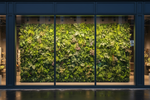
Modern Green Wall Ideas for 2026
, by Patrick Page , 5 min reading time
, by Patrick Page , 5 min reading time
Explore modern green wall ideas for 2026 through the lens of Leaf and Repeat. We share emerging design trends, new technology integrations, and practical insights shaping the future of artificial green walls in Australia
By 2026, we believe green walls will move further away from decorative add ons and become a considered architectural surface. The focus is certainly shifting from visual impact alone to how green walls support mood, flow, compliance, and long term use in commercial spaces.
We are seeing this shift most clearly in offices, some education spaces and healthcare settings, and the retail and hospitality sectors. Clients are asking better questions and they want to know how a green wall behaves over time, how it interacts with light, how it fits within building codes, and how it supports the overall design intent (rather than dominating it).
One of the strongest trends we see emerging is restraint. In earlier years, green walls were often dense, bold, and visually loud. In the early part of 2026, modern green walls are calmer and they tend to rely more on texture and subtle variation rather than colour contrast or novelty shapes. This is especially important in commercial and retail interiors where people spend long periods of time.
We are seeing more fern based foliage designs growing in popularity. These styles read as architectural rather than decorative, and they still sit comfortably alongside concrete, glass, timber, and steel. They also scale well across large wall areas without becoming visually tiring.
Lighting is another area where we see significant change. In the past, green walls relied on ambient room lighting or basic spotlights. Looking ahead, integrated lighting will become standard. This does not mean dramatic colour changing LEDs. Instead, we see a rise in warm white, low profile LED strips integrated behind or within the green wall structure.
These lights will be used to create depth and shadow rather than brightness. Soft backlighting can make a green wall feel lighter and more dimensional, particularly in spaces with limited natural light. In reception areas and corridors, lighting can help guide movement and subtly define zones without signage.
Solar lighting is also starting to play a role, particularly in semi indoor or covered outdoor commercial and residential spaces. While solar lighting is not new, its integration with green wall systems is becoming more refined. Small, concealed solar units paired with efficient LEDs can support evening ambience without additional wiring. This is especially relevant for hospitality venues and shared building spaces where operational simplicity matters.
We are also seeing more interest in modular lighting and accessory systems. Rather than treating a green wall as a fixed surface, designers are asking for flexibility. This includes the ability to add or remove lighting, signage, or decorative elements without disturbing the wall itself.
Ornaments are returning, but in a very different way. Instead of novelty items or themed decorations, we see a move towards minimal, sculptural elements. Think slim metal shelves, matte black logo plates, or subtle architectural forms that sit within the greenery rather than on top of it.
In commercial settings, branding is becoming more integrated and less literal. A green wall might carry a business logo, but it is often recessed, backlit, or finished in a tone that blends rather than contrasts. This approach feels more considered and aligns with modern brand identities that value calm and credibility.
Another key trend we are watching is zoning through green walls. Instead of feature walls placed at random, green walls are being used to define space. In offices, they are used to separate collaboration zones from quiet areas. In hospitality, they help transition between entry points, dining areas, and service zones.
In these applications, height and proportion matter more than density. Lower green walls, partial height installations, and framed sections are becoming more common. These designs feel intentional and architectural, especially when paired with clean edges and consistent panel patterns.
Technology is also influencing how green walls are specified. As we know, compliance is no longer an afterthought and there will be an increased demand for flame retardant panels and NCC compliant materials, particularly in larger commercial projects. This is shaping design decisions from the beginning rather than forcing compromises later.
From our perspective, this is a positive shift. When compliance is built into the product rather than added around it, designers have more freedom. They can focus on form, texture, and placement knowing the material is already suitable for the space.
Sustainability remains part of the conversation, but it is becoming more practical. Clients are less interested in greenwashing and more interested in durability, lifespan, and low maintenance. Artificial green walls that hold their colour, resist wear, and require no water or energy are being recognised as a valid solution in many settings.
We also believe mixed material green walls will grow in popularity. This might include combinations of greenery with acoustic panels, timber battens, or textured wall finishes. These designs create layered surfaces that serve multiple functions without visual clutter.
In education and healthcare environments, green walls are being designed to support calm and focus rather than stimulation. Softer foliage, consistent tones, and controlled lighting all play a role. These spaces benefit from green walls that feel grounding rather than decorative.
Looking ahead to 2026, we think the most successful green wall designs will be those that feel effortless. They will not shout for attention. They will sit naturally within a space and support how people move, work, and rest.
At Leaf and Repeat, our focus is on creating panels and systems that allow this kind of design thinking. We are less interested in trends for their own sake and more interested in how green walls can quietly improve commercial interiors over time.
The future of green walls is not about more foliage. It is about better integration, better materials, and better understanding of space. That is where we see the market heading, and it is where we are placing our energy as we move into the next few years.


We allow cookies - by clicking on accept you agree with our privacy policy.